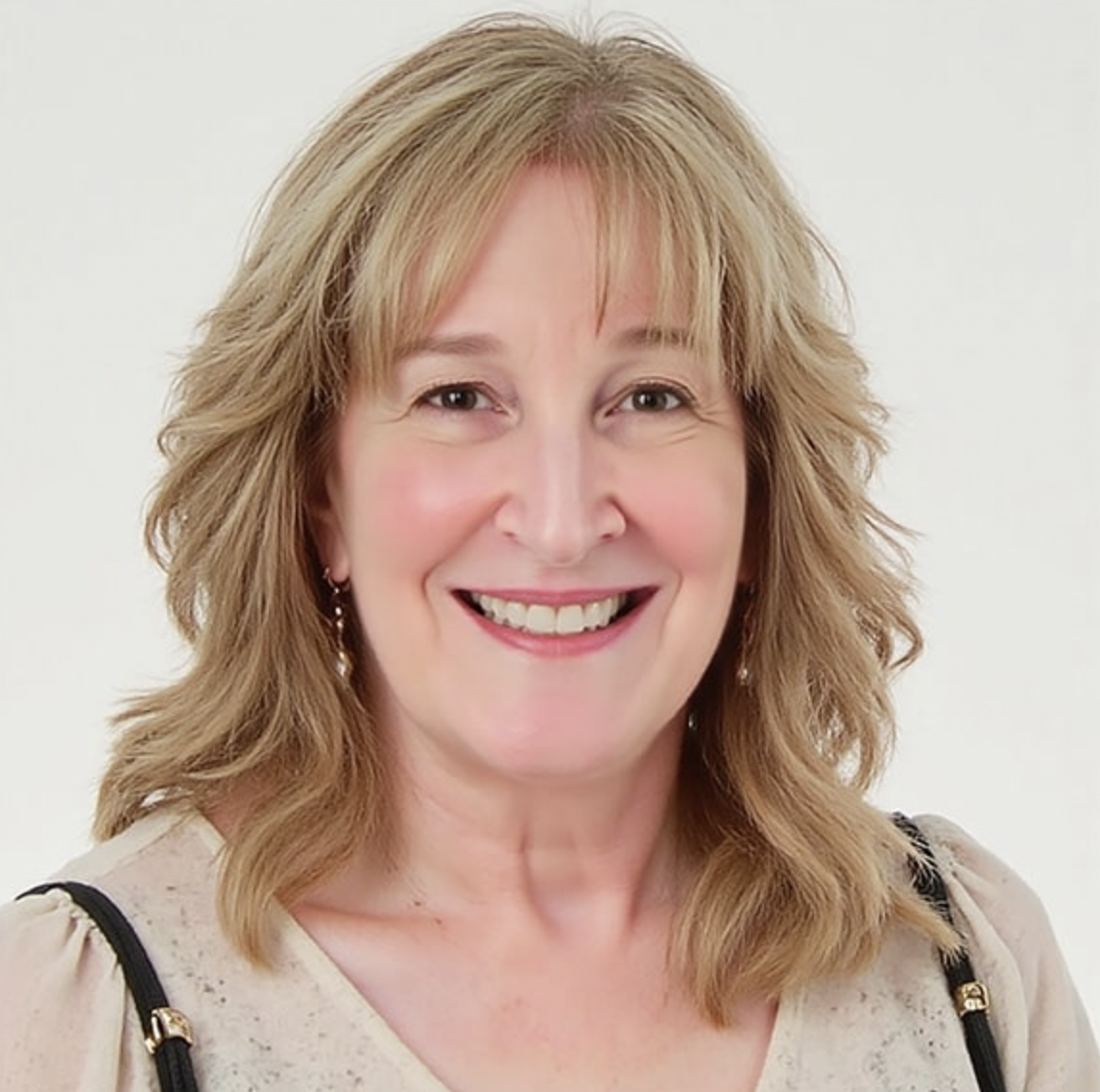
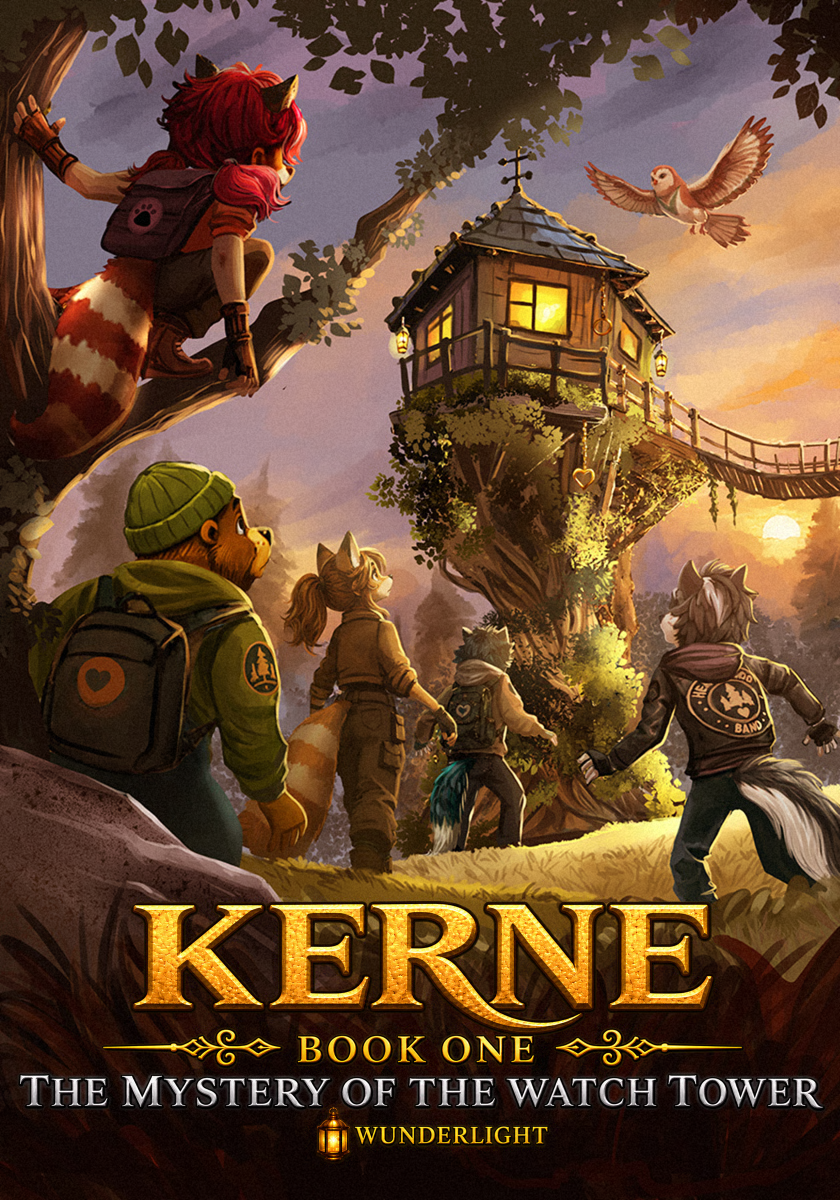
When Kristy Pittman began developing KERNE: The Mystery of the Watch Tower, she wasn't simply writing a children's book. She was building an entire world.
Whisper Hollow needed streets and shops, a bakery and schoolhouse, forests and creeks—and, of course, a mysterious abandoned Watch Tower. Then there were the characters: five adventurous girls at the heart of the story, their friends, families, and a growing cast whose secrets will unfold over a planned five-book series.
Kristy had a clear picture of this world in her imagination. The challenge was getting it onto the page.
As a first-time independent author working with a limited production budget, she began experimenting with AI-assisted imagery as a way to visualize her characters and settings. What started as experimentation grew into months of intensive art direction, character development, world building, revision, layout, and print preparation.
But the process also led Kristy to an unexpected decision.
After developing the visual world of KERNE, she decided that the final published illustrations should be recreated by human artists.
I spoke with Kristy about building KERNE, what AI helped her accomplish, where it fell short, and why she's now taking the visual blueprint she created and placing it in the hands of illustrators.
The Interview
Jo Ann: Let's start at the beginning. What is KERNE?
Kristy: KERNE: The Mystery of the Watch Tower is a mystery-adventure for kids ages 7–12 and the first book in a planned five-book series.
At the center are five friends—Sloane, Roxy, Grace, Echo, and Kit—who live in Whisper Hollow. What begins as curiosity about an old Watch Tower gradually opens the door to a much larger mystery involving their town, their families, and things that happened long before they were born.
Friendship is really the heart of it. The girls have very different personalities and strengths, but they learn that they're stronger together.
I wanted to create the kind of world I loved disappearing into as a kid—a place where you finish the book but aren't quite ready to leave.
Jo Ann: You had never illustrated a children's book before. How did you begin creating such a visual story?
Kristy: I started with the story and the characters.
Before worrying about exactly what a finished illustration would look like, I needed to know who these kids were. How does Sloane lead? How does Roxy react when she's excited? What does Grace worry about? What would Echo notice that everyone else misses? What would Kit build?
Once their personalities became clear, their appearances started becoming clear too.
AI-assisted image tools gave me a way to begin visualizing what was in my head without the initial expense of commissioning dozens of illustrations before I even fully understood the visual world myself.
Suddenly I could see Whisper Hollow. I could see the Great Tree, Moonstone Creek, the Watch Tower and these characters I'd been imagining.
That was incredibly exciting.
But it was only the beginning.
Jo Ann: Some people imagine using AI means typing a prompt and receiving a finished book. Was that your experience?
Kristy: Not even remotely!
Creating one attractive image can be relatively easy. Creating a hundred images that all look like they belong to the same story is completely different.
A character might look perfect on one page and suddenly look younger on the next. Hair changes. Clothing changes. Body proportions change. A character's tail might change color. Buildings move. Lighting changes. Props disappear.
You fix one thing and something else changes.
I eventually had detailed character references and rules for practically everything. I became obsessive about consistency because I wanted a reader to recognize a character immediately regardless of the scene.
The biggest lesson was that technology doesn't make the creative decisions for you. Someone still has to decide what belongs in the world and what doesn't.
Jo Ann: So, you essentially became the art director of your own book.
Kristy: That's probably the best description of it.
I was making decisions about composition, expression, character positioning, lighting, color, continuity, page pacing and storytelling.
And then I discovered an entirely different world: book production.
Resolution. Bleed. Trim size. RGB versus CMYK. Color profiles. Typography. Page numbering. Print proofs. Offset printing. Even how pages are grouped into signatures at the printer.
There were days when I thought, I just wanted to write a children's book. How did I end up learning this?
But every problem I solved taught me something that will make the next book better.
Jo Ann: You've recently made an important decision about the final artwork. What changed?
Kristy: I decided to hire human illustrators to recreate the artwork for the published book.
It wasn't a decision I made because I wanted to pretend the AI-assisted development process never happened. Quite the opposite. That process was enormously valuable.
It helped me discover what KERNE looks like.
I now have established characters, environments, clothing, colors, locations, compositions and an incredibly detailed visual language for the series.
But once I had built all of that, I realized I wanted to take the next step.
I want an illustrator's hand in the finished artwork.
So now I'm working with artists who can take this extensive visual blueprint and reinterpret it as original, human-created illustration while preserving the characters and world readers are already beginning to recognize.
Jo Ann: Was it difficult to make that decision after putting so much work into the existing illustrations?
Kristy: Very.
I've spent hundreds of hours on them. There are images I've revised over and over because one tiny detail wasn't right.
At first, replacing them almost felt like throwing that work away.
Then I realized I'm not throwing it away at all.
I'm using it as the blueprint.
An illustrator isn't starting with, "Here's my manuscript—what do you think Sloane should look like?"
Sloane already exists. Roxy exists. Whisper Hollow exists. The Watch Tower exists.
I've done a huge amount of visual development that normally happens before final illustration.
Now the challenge is finding artists who can take that foundation and bring something human to it without losing what makes KERNE look like KERNE.
Jo Ann: What are you looking for in the artists you hire?
Kristy: Character consistency is probably number one.
If an artist draws Roxy beautifully once but she looks like a different character three pages later, it won't work.
I'm also looking for artists who can capture the slightly realistic, richly textured storybook quality of the world—the fur, clothing, forests, old wood, lantern light and atmosphere—without making it photorealistic.
And I've made one requirement very clear: the new illustrations must be human-created, with no generative AI used in the illustration process.
Digital illustration is completely fine. An artist can draw and paint in Photoshop or another professional program. What matters to me is that an illustrator is actually creating the artwork.
I'm also asking to see sketches and working files as part of the process.
Jo Ann: Has changing illustrators changed the book itself?
Kristy: Interestingly, yes.
It made me reconsider whether every moment really needed a full-page illustration.
The earliest version became extremely visual—more than 100 illustrated pages. Now I'm looking at the book through a different lens.
Some moments deserve a full-page illustration because seeing the world is part of the storytelling—the first time the reader enters the Watch Tower, for example.
Other scenes are stronger when I let the words do more work and use a smaller illustration or no illustration at all.
I think that balance is actually making KERNE feel more like the illustrated middle-grade adventure I originally wanted it to be.
Jo Ann: What would you tell another first-time author considering AI-assisted visualization?
Kristy: I'd tell them to decide what they're trying to accomplish before choosing the tool.
If you're trying to explore what a character or imaginary world might look like, technology can be an incredibly useful visualization tool.
But don't confuse generating an image with developing a book.
You still need characters with personalities. You need story structure. You need pacing and dialogue. You need consistency. You need to understand how the images support the story rather than overwhelm it.
And if you're eventually going to work with an illustrator, all of that early visual development can still be useful. You can walk into that relationship knowing your characters, your world, your palette and the emotional feeling you're trying to create.
The tool shouldn't be the vision.
The story has to come first.
Jo Ann: What's one thing you would do differently if you were starting KERNE today?
Kristy: I would decide much earlier which moments truly deserve major illustrations.
I learned that more artwork doesn't automatically make a stronger book.
Sometimes turning the page and discovering one beautiful illustration after several pages of story gives that image much more power.
I would also create the character and world guides earlier. Once you know the rules of your world, every decision becomes easier.
Jo Ann: And what's one thing you wouldn't change?
Kristy: The willingness to figure it out as I went.
There were so many points when I could have said, "I don't know how to do this."
And usually I didn't.
But I learned.
Writing the story led to character development. Character development led to world building. World building led to illustration. Illustration led to layout. Layout led to printing. Printing led to learning about color and production.
And now I'm learning how to collaborate with professional illustrators.
I don't think you have to know how to do everything before you begin.
You just have to be willing to learn the next thing.
Jo Ann: KERNE is planned as a five-book series. Has this experience changed how you'll approach Book Two?
Kristy: Absolutely.
Book One has been my education.
The wonderful thing is that I'm not starting Book Two from zero. The characters exist. The world exists. I know much more about pacing, illustration planning and production.
And because KERNE is a five-book story, things introduced in the first book have meaning later. There are mysteries and relationships that won't fully make sense until future books.
That's probably what excites me most now.
I've built the door.
Book One is just where the kids—and the readers—open it.
What's Next for KERNE
KERNE: The Mystery of the Watch Tower is the first installment in Kristy Pittman's planned five-book children's mystery-adventure series from Wunderlight Media.
As Kristy transitions the book's early AI-assisted visual development into original human-created final illustrations, one thing remains unchanged: the world, characters and story at the heart of KERNE are hers.
And perhaps that's the most interesting lesson from her unconventional road to publication.
Creative tools will continue to change.
Storytelling still begins with having something worth imagining.
Visit the KERNE Kickstarter campaign
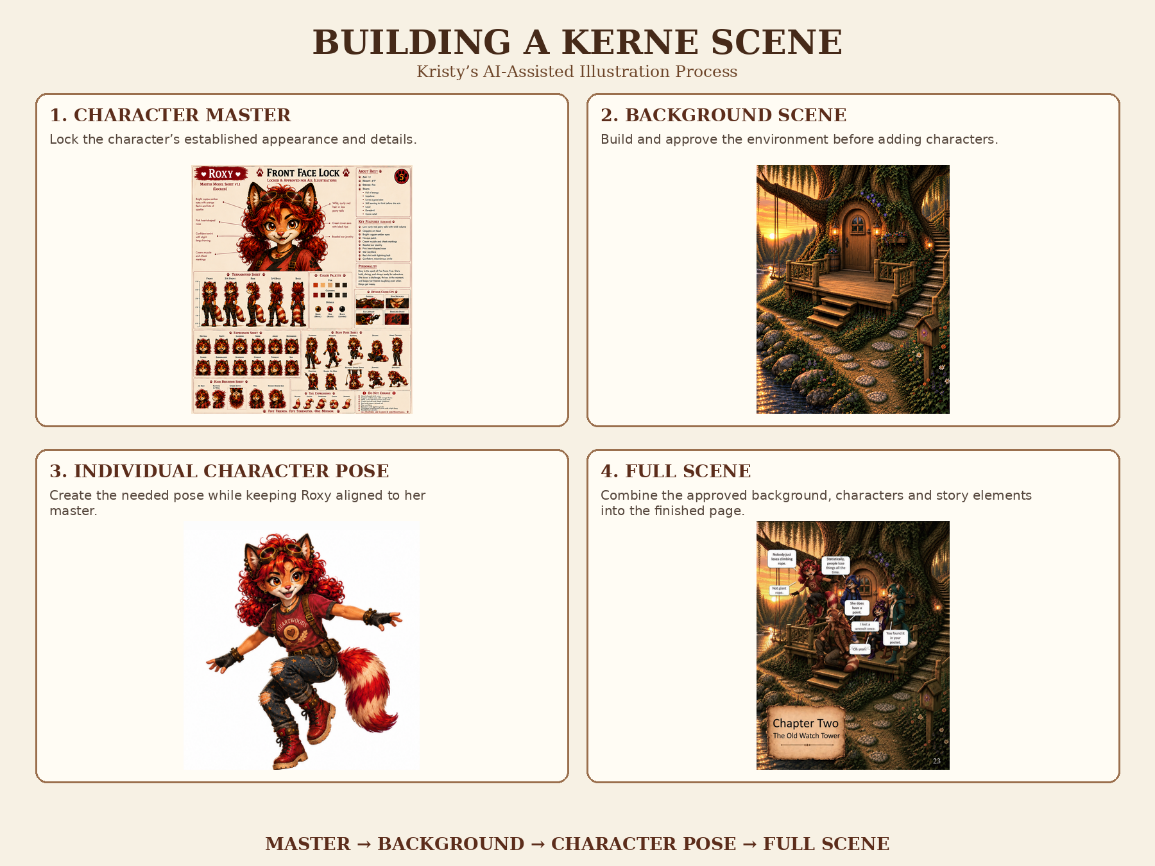
Behind the Scenes: How Kristy Built the Original Visual Blueprint for KERNE
Kristy's step-by-step AI-assisted development process
People sometimes assume an AI-assisted illustration begins and ends with writing a prompt. For KERNE, my process became much more structured. Once I established the characters and visual world, I essentially began building each scene piece by piece.
1. Establish the character masters first.
Before creating scenes, I developed a master reference for each recurring character. Their face, fur and hair, colors, clothing, body proportions, distinguishing features and overall personality needed to be established first. Once I approved a character, that became the visual reference I returned to again and again.
2. Establish masters for important places and objects.
Characters weren't the only things that needed continuity. Recurring locations and objects also needed established references—the Great Tree, Watch Tower, Moonstone Creek, backpacks, clothing, signs and other elements of the KERNE world. If something was going to appear repeatedly, I wanted to know what it looked like before building scenes around it.
3. Build the environment before adding the characters.
For many of the more complicated illustrations, I found it worked better to establish the background scene first. I could concentrate on composition, perspective, architecture, lighting, season and mood without simultaneously trying to control several different characters.
4. Create the characters individually against their masters.
Rather than trying to create an entire group of established characters at once, I often worked on them separately. Each character could then be compared with his or her master: Is the face right? Hair? Fur? Clothing? Height? Expression? Tail? Colors?
This was one of the most time-consuming parts of the process because a character could be almost right and still not feel like that character.
5. Bring the characters into the established scene.
Once the individual characters were working, I could place them into the scene and concentrate on their positions, scale, poses and interactions.
That created another round of decisions. Who is closest to the viewer? Where is everyone looking? Are their relative heights correct? Does the lighting on each character actually belong in that environment?
6. Correct visual drift one detail at a time.
Even with established references, details could drift. A hairstyle could change. A character could suddenly look younger. Clothing might be wrong. A tail could change color or shape.
Instead of accepting those inconsistencies, I went back and corrected them against the established masters.
Eventually I learned that consistency isn't something you solve once. You have to protect it throughout the entire book.
7. Learn how to give precise editing instructions.
This became one of the biggest lessons of the entire process.
I learned that there is an enormous difference between asking for a new image and asking for one very specific change to an image that is already 95 percent correct.
Early on, I might simply say, "Change Roxy's backpack," only to discover that the backpack changed—but so did Roxy's face, another character's clothing or something in the background.
Eventually my instructions became extremely specific. I learned to define not only what should change, but what absolutely should not change.
An instruction might become:
"Replace Roxy's backpack with the pink backpack from her character master. Do not redraw Roxy. Do not change her face, pose, clothing, fur or tail. Do not alter any other characters or any part of the environment. This is a surgical edit to the backpack only."
I developed a kind of production shorthand with ChatGPT: "surgical edit," "remove only," "replace only," "do not redraw," "preserve the existing composition," "locked character," and "no other changes."
Once something was right, I considered it locked. If Sloane's face was right, don't touch Sloane's face. If the Watch Tower was right, don't redesign the Watch Tower because I'm changing something beside it.
That may sound incredibly detailed, but when you're trying to maintain continuity across an entire illustrated book, those details matter.
Ironically, learning how to give precise direction to AI also taught me how to become a better art director. I'm using many of those same skills now with human illustrators—providing character masters, identifying non-negotiable details, explaining what they are free to interpret, and reviewing sketches before they move into final rendering.
8. Make the characters belong in the environment.
Putting characters onto a background wasn't enough. Lighting, shadows, color temperature and perspective had to make them feel as though they were actually standing in the same place.
For KERNE, atmosphere became especially important—warm lantern light, sunsets, moonlight, water, forests and the darker interiors of places like the Watch Tower all needed their own feeling.
9. Add the storytelling elements last.
Once the artwork was stable, I could add dialogue, narration and other page elements and evaluate the entire composition as a book page rather than simply as an illustration.
Sometimes that revealed a new problem: the artwork was beautiful, but there wasn't enough room for the story.
That eventually taught me an important lesson: the illustration has to serve the book, not the other way around.
10. Review the finished page against the entire book.
A page could look wonderful by itself and still be wrong for KERNE. I compared finished pages against surrounding pages, character masters and previously established locations to make sure the book continued to feel like one continuous world.
11. Prepare the artwork for print.
The final step wasn't glamorous, but it became incredibly important: resolution, trim size, bleed, typography, color conversion and print proofing.
I learned quickly that something that looks beautiful on a bright computer monitor doesn't necessarily reproduce the same way on paper.
What I Learned
The biggest surprise was that my process gradually became less about generating images and much more about art directing a visual world.
Technology could give me possibilities, but it couldn't decide which version was Sloane, whether a particular street really felt like Whisper Hollow, or whether an illustration captured the emotion I wanted a child to feel when turning the page.
Those decisions were mine.
And ironically, all of that work is what now makes my transition to human illustrators possible. Instead of handing an artist a manuscript and asking, "What should this world look like?" I can hand them a developed visual blueprint and say:
"This is KERNE. Now bring your hand to it."
I've Chosen an Illustrator! An Update from Kristy
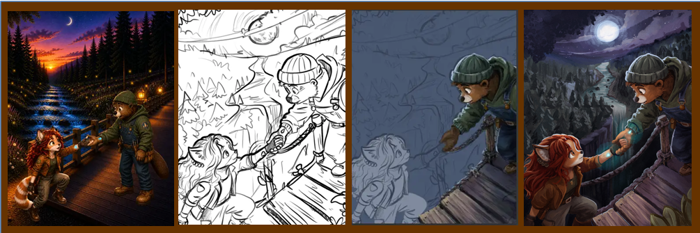
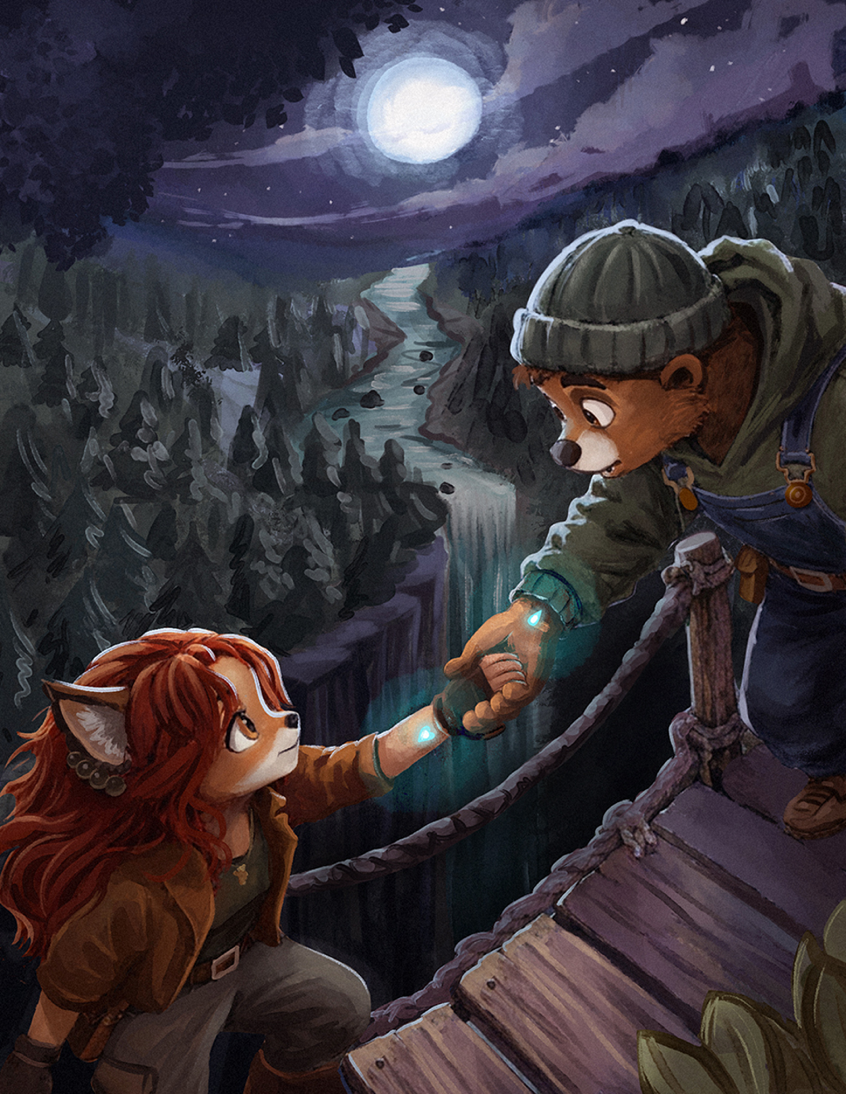
Below you can see my original AI-assisted visual concept and how Diego LI interpreted it through his own hand-drawn process. He kept the established characters and story moment recognizable while bringing his own artistic style and interpretation to the scene.
The progression shows how the original concept became a guide for the new artwork while allowing Diego's own hand and creativity to shape the finished illustration:
Illustrating Children's Books: Final Thoughts from Jo Ann
Kristy's KERNE project is impressive in scope, imagination, and sheer determination. With no prior illustration experience, but guided by her love of storytelling, she took a deep dive into image generation technology and managed to create the stunning scenes and characters of KERNE world.
While the speed and efficiency promise of AI-assisted imagery is well-known and compelling, it nevertheless required an enormous time commitment to edit, revise, and regenerate each image. Consistency was a huge challenge. Getting the characters to look just right, with appropriate facial expressions, clothing alterations, and position changes across multiple pages takes attention to the finest detail, plus ongoing tweaking, and re-iteration.
It's not surprising that Kristy is now taking the next step by turning to human illustrators to recreate the images for the first book and those that follow. The AI-assisted process gave her a way to develop the characters, settings, and visual identity of KERNE in remarkable detail. Rather than leaving that work behind, she is now using it as a visual blueprint for the human artists who will create the final illustrations.
I don't think that decision means AI, a tool guided by data-driven algorithms, can't produce beautiful, meaningful art. I've been exactly where Kristy has been, trading AI's speed for repetitive iteration and re-dos, and I often get stunning images from even simple text prompts. Something deeper is going on, too. Researchers understand the broad mechanics of image generation, but no one can fully say why a model chooses one detail over another. All we see is a digital timer ticking away on a blank canvas. Perhaps it's unknowable, just as the synapses that join memory, experience, and emotion in a human mind are. Are we giving AI too little credit, or too much? Perhaps we'll never know.
Every author's path is different, but for a five-book series that needs every character and scene to be consistent, authentic, and believable on every page, Kristy chose the magic of human hands to build on the amazing visuals she created with AI.
Working on your own children's book and wondering how to plan the illustrations — or how to brief an illustrator? That's exactly what we map out together in one-on-one coaching for children's book authors. Or book a free coaching call — I'd love to hear about your book.