
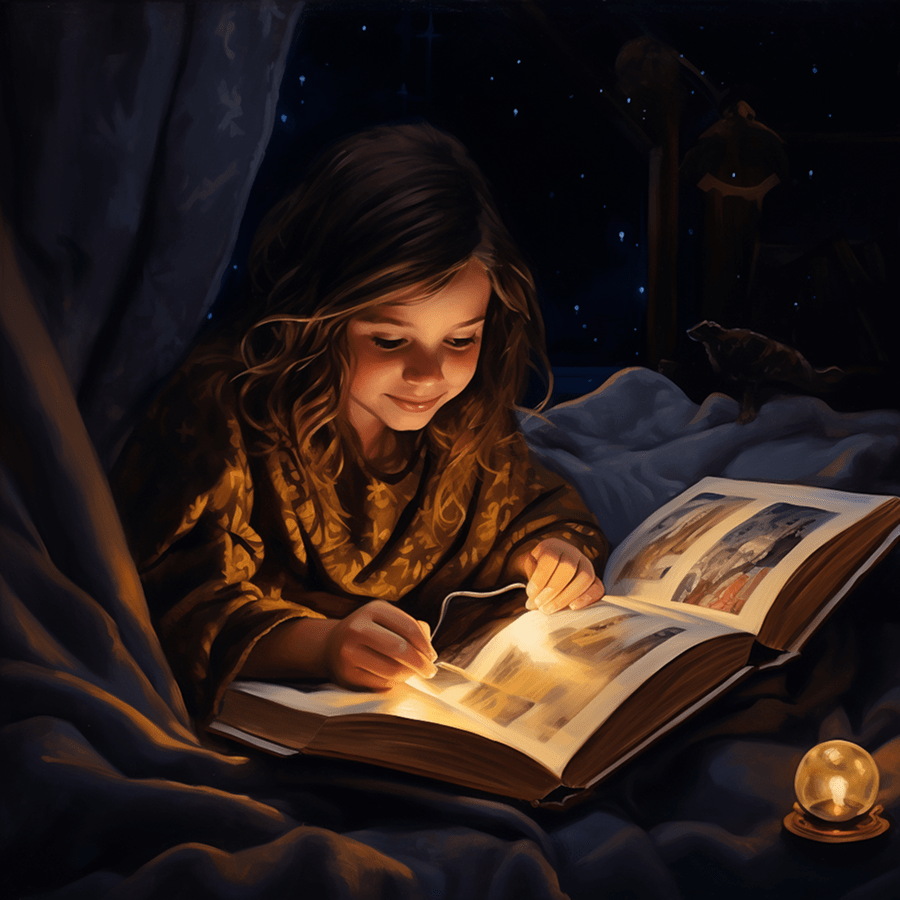
A Picture Book Illustration Has a Job to Do
A gallery painting can simply be beautiful. A children's book illustration has to do something else entirely — it has to move a reader forward, page by page, toward the end of a story. That distinction took me years to fully understand, and it changes almost everything about how you approach a scene.
Study how page-turns work before you study anything else. A good illustration makes a young reader want to know what happens next, not just admire what's in front of them. And your images shouldn't simply repeat what the words already say. If the text tells us the dog ran away, the illustration should show something the words didn't — where the dog went, or the exact look on the child's face watching it disappear. That gap between what's written and what's drawn is where the real storytelling happens.
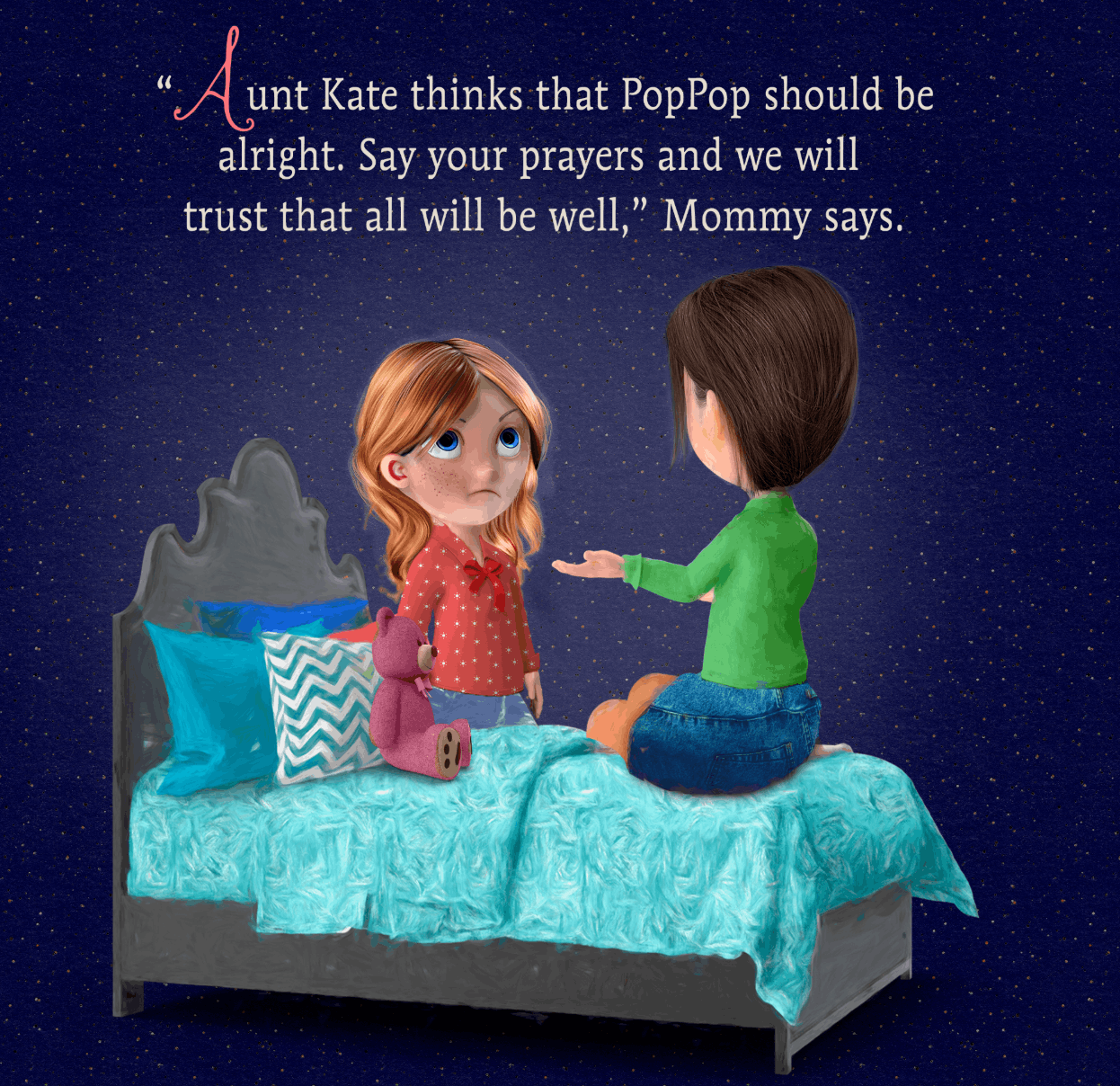
Your reader's age matters here too. A board book for toddlers wants simple, bright, high-contrast scenes. A middle-grade book might only need spot illustrations, often in black and white. I've seen genuinely talented children's book illustrators undercut their own work by illustrating for the wrong age entirely.
Character Consistency Is the Hardest Part, and the Most Important
Nothing pulls a young reader out of a story faster than a character who looks slightly different from page to page. Getting a face, a hairstyle, an outfit, a posture to hold steady across thirty-two pages — in different poses, different emotions, different lighting — is genuinely difficult, and it's the skill that separates a finished, professional-feeling book from one that reads as amateur, no matter how nice any individual illustration looks.
When I began my first AI-assisted book, this was the exact problem I ran into. The tools at the time weren't reliable enough to hold a character's likeness across a whole story, and I had to lean heavily on Photoshop to correct and align faces by hand, scene after scene. That's improved significantly since — character modeling tools now let you train a consistent character and reference it across every illustration — but I still don't fully trust any tool to get this right without a human eye checking every page against every other page. It's part of why, at Story Quest, I still review every character by hand before a book is considered finished.
Color and Illustration Style Aren't Decoration — They're Doing Emotional Work.
Children respond to color before they respond to almost anything else on a page, and I don't think that's talked about enough. A warm, golden palette tells a very young reader that a scene is safe before they've even processed what's happening in it. A cooler, more muted palette signals something is wrong, long before the words confirm it.
I think about color intentionally on every page, not just as a stylistic choice but as a piece of the storytelling itself. This is one place where AI tools have genuinely surprised me — trained on enormous libraries of art and photography, they're remarkably good at generating harmonious, mood-appropriate palettes quickly, which frees me to spend more of my own time on the parts of a page that need a human hand.
The Workflow That Actually Works, For Me
I get asked constantly whether authors should illustrate with AI, with Photoshop, or teach themselves traditional art entirely. My honest answer is that I don't use just one of these, and I don't think most illustrators should. I've laid out the full comparison — cost, quality, and where each approach actually breaks down — in my honest guide to AI versus traditional illustration.
I spent a decade illustrating in Photoshop before AI tools existed, transforming photographs into picture book art, layer by careful layer. That background still does the real work, and it's the foundation of how I coach authors through the same process at Story Quest today. I'll use AI to explore an idea quickly — testing a scene, a character's pose, a color palette — but every illustration still passes through the same hands-on refinement that always made the difference: fixing hands, adjusting an expression until it feels true, getting the light exactly right. The tool changed. The craft underneath it didn't.
For a self-publishing author illustrating their own first book, I'd suggest starting with the same order I use — explore broadly and quickly with AI, then slow down and refine by hand. Trying to do everything in Photoshop from the very first sketch is exhausting and slow for a beginner. Trying to skip the refinement stage entirely produces work that looks unfinished, no matter how good the initial AI generation was.
Will AI Replace Illustrators?
No — and I say that as someone who uses it every day. What AI has changed is how I begin a piece, not what makes the finished illustration actually good. The judgment about pacing, the correction of a hand that looks wrong, the decision about exactly how much sadness to put in a character's eyes on the saddest page of the book — that's still, entirely, a human skill. I don't think that changes anytime soon, and honestly, I hope it doesn't.
If You're Illustrating Your Own Book
My honest advice, after doing this for well over a decade: don't try to learn everything at once, and don't assume you need years of formal art training before you start. Start with one character, get them right across a handful of poses, and build outward from there. Study illustrated children's books you love the way you'd study anything else you were trying to learn — page by page, asking why a particular scene works. When you're ready to go from one character to a full book, I've laid out the whole process in how to illustrate a children's book, step by step.
This is exactly the kind of hands-on guidance I work through with authors in my children's book author coaching — not handing your book off to be illustrated by someone else, but learning to illustrate it yourself, with someone who's made every mistake in the book sitting beside you.
Have questions about illustrating your own book? I'm here to help.
Ready to talk through your book? Book a free coaching call — no pressure, just a real conversation about where you're stuck.